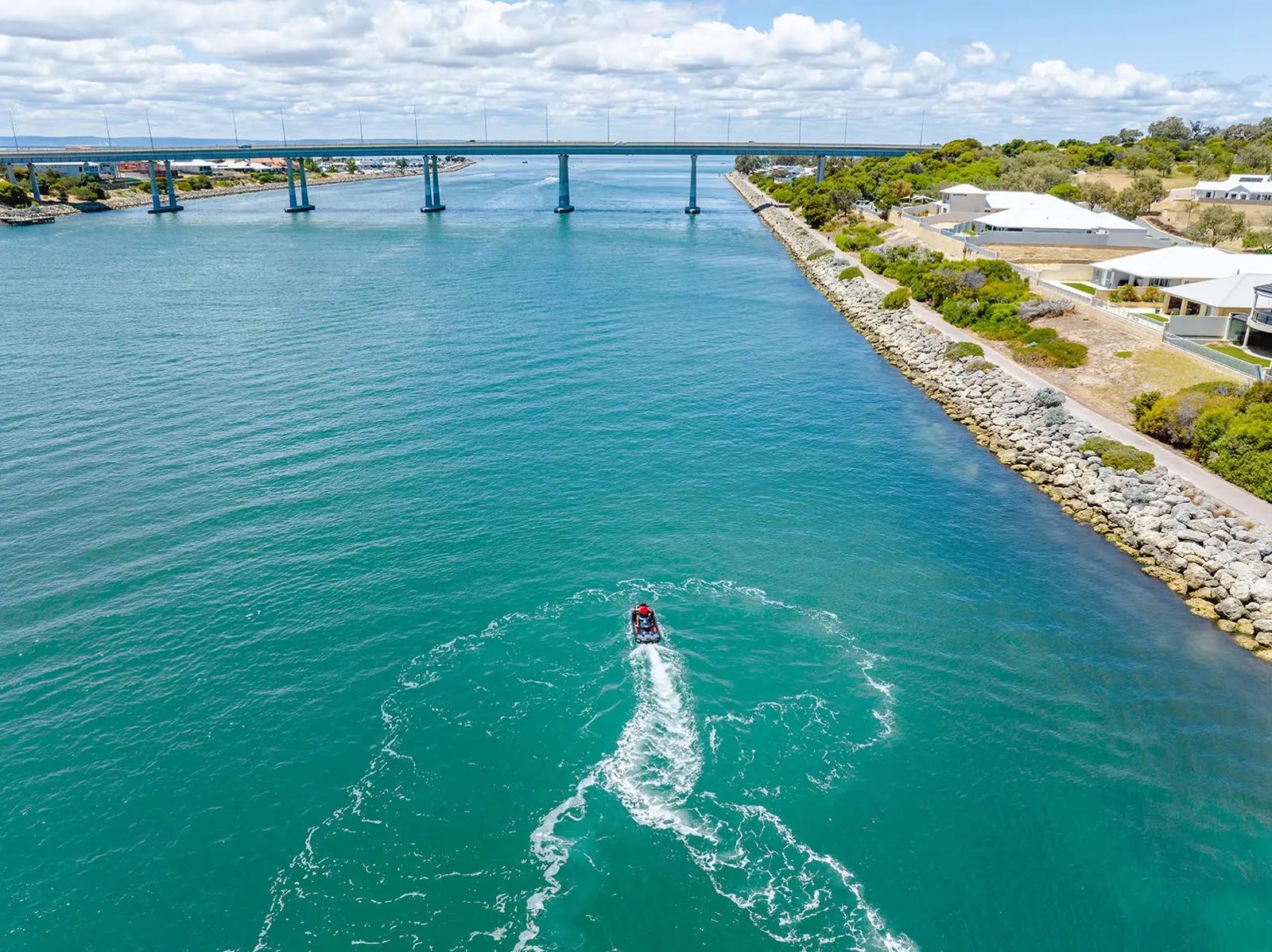
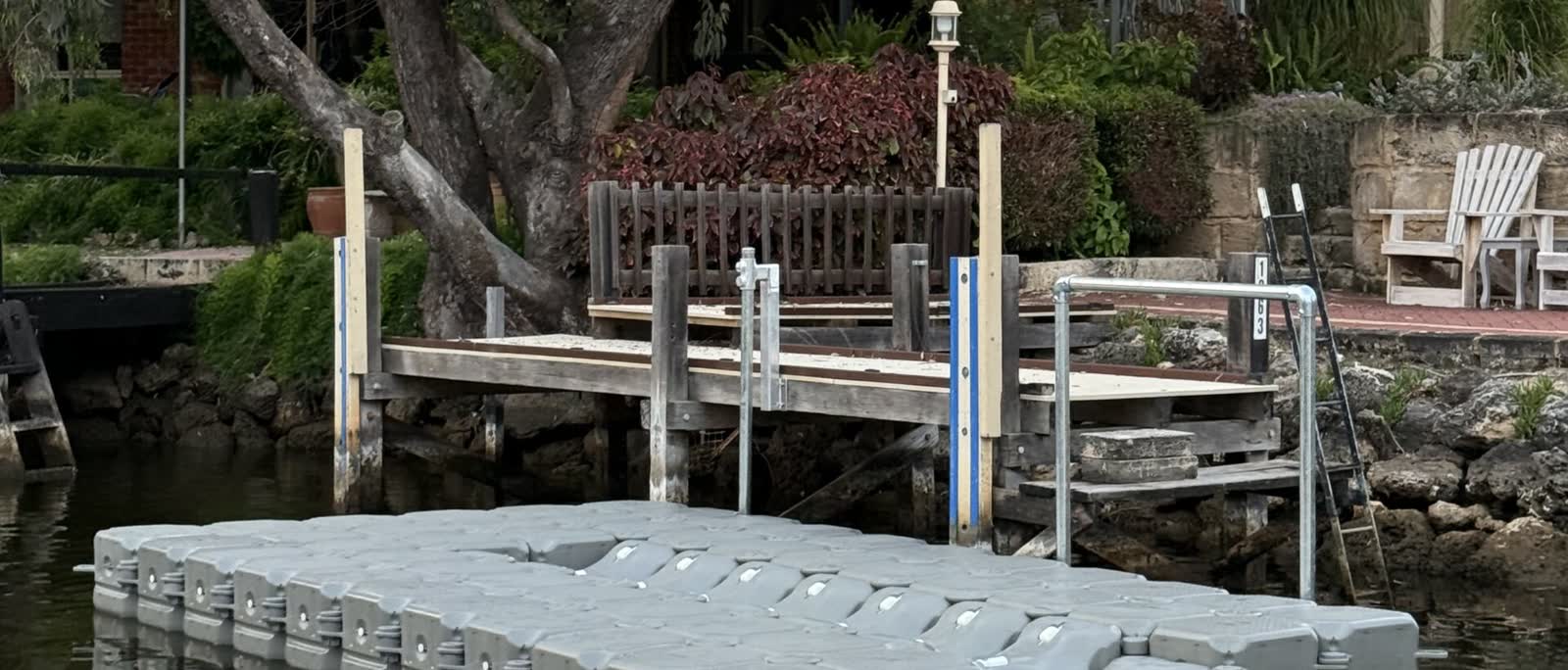
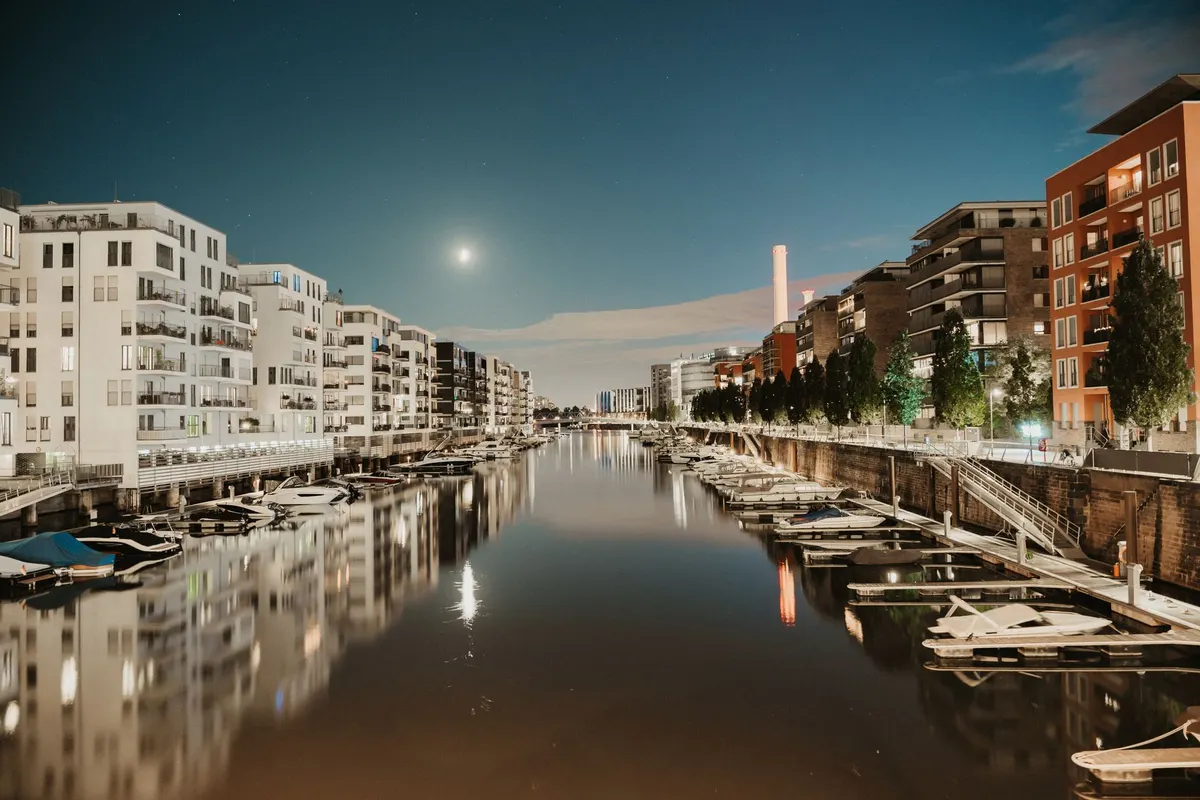
A canal property in Mandurah means you can step off your back deck and onto your boat. It also puts the docking decision on you: a floating dock, a fixed jetty, or leaving the vessel in the water. This guide sets out what WS Docks builds for a canal berth, in the words and prices on their own website, and the questions worth asking before you choose.
What changes when your berth is at home
At a marina, the berth and its upkeep are someone else’s job. At a canal home, the structure at the water’s edge is yours to choose and look after, so the questions about salt water, getting on and off the boat, and upkeep land with you.
Damian and the WS Docks team grew up around Mandurah, owned dinghies and got tired of launching and retrieving. In their own words, they looked for alternatives and found floating docks were the most cost effective option, and they now bring that product to boat owners across Western Australia and Queensland.
Fixed jetty versus floating dock: what to ask
Nothing on the WS Docks website compares a fixed jetty with a floating dock at a particular canal block, so the comparison is a set of questions for whoever quotes. Ask each supplier how the structure suits your boat’s weight and hull, how it will be mounted at your berth, what upkeep it needs and what that costs, what the warranty covers, and who carries out repairs later.
On mounting, the quote form on each WS Docks dock page offers three options: roping, fixed jetty brackets or floating jetty brackets. Ask them which suits your block.
Does a floating dock help with salt water?
Protection from salt water runs through every description on the WS Docks services page: the small boat dock provides “protection from the corrosive salt water”, and the jetski dock protects a jetski from the harsh salt water environment and keeps it in the water all year round. Their home page also claims “$1000s saved in antifoul per year”. That figure is their claim, not one worked out for your boat, so ask how it applies to yours.
The docks are built, in their words, with HDPE blocks engineered to withstand Australia’s harsh elements, custom brackets designed to withstand the toughest conditions and bracing capable of supporting excess weight. For jetski owners, the jetski dock listed at $3,000 on the WS Docks services page is the dock built for that craft.
Which dock suits which vessel on a canal block?
Canal lots in Mandurah are home to all kinds of boats, and WS Docks lists a dock for each by weight or type: small boats up to 1.5 tonne listed at $5,000, medium boats from 1.5 to 2.5 tonne listed at $11,000, and large boats from 2.5 to 5 tonne listed at $16,000, using what they describe as a first of its kind sinking system.
Pontoon boats have their own dock using premium rollers, “with specific attention taken to ensure the dock suits the exact hull shape of your boat”, listed at $13,000. Catamarans combine the custom rollers and the sinking system for twin hull boats of all sizes, listed at $18,000. If your neighbours keep different boats from yours, their dock may not be the right guide to yours.
What about swim platforms and the kids’ kayaks?
A dock that holds the boat is one thing; canal living is also swimming, paddling and launching from the water’s edge. WS Docks lists jetty and swim platforms at $1,000 on their services page, custom built to suit the space available, for swimming, kayaking, diving and paddle boarding. Work platforms and walkways, also listed at $1,000, are for commercial or private use as a stable way to reach hard to reach spaces on the water.
What does a custom floating dock project involve?
The WS Docks website does not set out a project process, so the clearest guide is what customers say. One customer’s Google review says Damian and Josh “got back to me within a few hours of receiving my email and were able to quote my dock the next day”. Another says “the wait time was shorter than quoted and the dock was installed efficiently and professionally”. Those are customers’ own words about their own jobs.
Their home page lists 200+ custom dock installations, names local marinas among their customers, and carries a 2 year warranty guarantee; ask what the warranty covers for your dock. If you are ready to discuss your site, their floating dock and docking system services page is the right starting point before you call or email.
Frequently asked questions
Can a floating dock handle a pontoon boat or catamaran on a canal lot?
WS Docks lists a pontoon boat dock using premium rollers, built to suit the exact hull shape of the boat, at $13,000, and a catamaran dock combining the custom rollers and their sinking system, at $18,000, on their services page.
What is the sinking system?
WS Docks describes it as a first of its kind, used on their medium and large boat docks, and says it lets them custom make docks up to 5 tonne. Their website does not describe how it works, so ask them to explain it for your boat.
Is a floating dock worth it if I only use my boat on weekends?
That depends on your boat and your costs. WS Docks’ own home page claims “$1000s saved in antifoul per year”; ask them how that claim applies to a boat used the way you use yours, and compare it with what you spend now.
How do I get a quote for a canal property in Halls Head or Wannanup?
Use the quote form on any WS Docks dock page, which asks for the location of the dock, your boat’s length, beam, make and model, and a mounting option. Or phone +61 431 149 231 (Monday to Friday, 8:00am to 5:00pm) or email [email protected]; their site says “We reply within 24 hrs”.
Sources
This article draws on the following pages.