Which lasts longer, an HDPE floating dock or a timber one? No single figure answers that for every berth, and WS Docks does not publish a service life for either material. What it does publish is what its own docks are made of. This guide sets that out in their words, and gives you the questions that turn “which lasts longer” into answers you can compare between suppliers.
What are WS Docks floating docks made of?
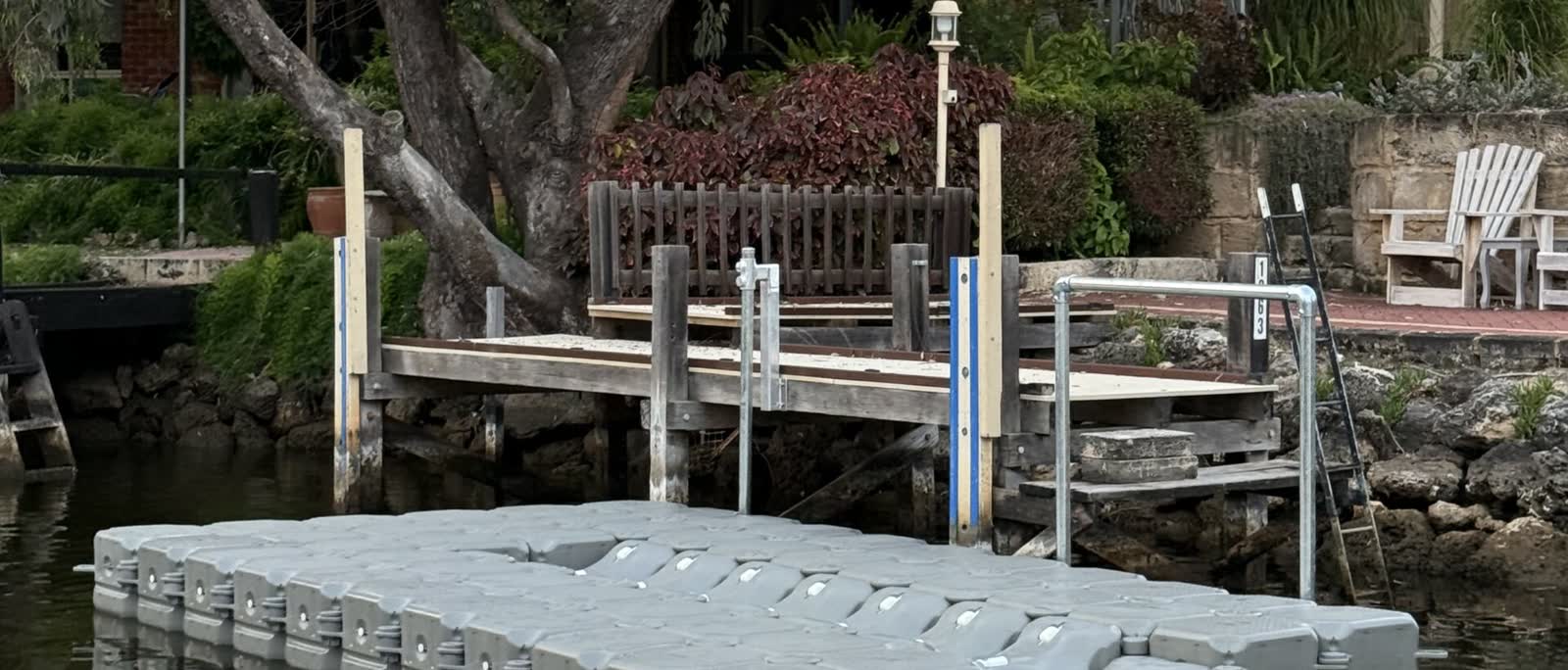
WS Docks builds with HDPE blocks. In their own words, their docks use “HDPE blocks engineered to withstand Australia’s harsh elements, custom brackets designed to withstand the toughest conditions, and bracing capable of supporting excess weight”. They say they have partnered with some of the finest fabricators and rope splicing experts in Australia, and they describe themselves as offering mounting solutions for docks.
Their home page backs that with four claims: 200+ custom dock installations, local marinas among their customers, “$1000s saved in antifoul per year”, and a 2 year warranty guarantee.
How long does an HDPE floating dock last compared with timber?
There is no published figure from WS Docks for the service life of an HDPE dock or a timber one, so any number you see quoted should come from the supplier quoting your dock, in writing, for your berth. Lifespan depends on the site, the boat and the upkeep, which is why the useful step is to ask every supplier the same questions.
What should you ask about lifespan and upkeep?
Put these to any supplier, for an HDPE dock or a timber one:
- What service life do you expect for this dock at my berth, and what is that based on?
- What upkeep will it need each year, and what does that cost?
- Which parts wear first, and what does replacing them involve?
- Is the dock rated for my boat’s weight class?
- What warranty comes with it, and what does the warranty cover?
- Who carries out repairs later?
Written answers to the same list are the only fair way to compare an HDPE quote with a timber one.
Which boats do WS Docks HDPE docks carry?
WS Docks lists its docks by the boat they carry, each with a price on its services page: a jet ski dock at $3,000, a small boat dock for boats up to 1.5 tonne at $5,000, a medium boat dock for 1.5 to 2.5 tonne at $11,000, and a large boat dock for 2.5 to 5 tonne at $16,000. They describe the sinking system used for the medium and large docks as a first of its kind, and say it lets them custom make docks up to 5 tonne.
Pontoon boats have their own dock with premium rollers, at $13,000. For owners berthing larger vessels or catamarans, the catamaran dock combines the custom rollers and the sinking system for twin hull boats of all sizes, at $18,000.
What does the warranty tell you?
The WS Docks home page carries a 2 year warranty guarantee. It does not publish the terms, so ask what it covers for the dock you are buying, and ask any timber supplier the same question about theirs. A warranty is one of the few written commitments you can compare directly between two quotes.
Where to start
WS Docks builds floating docks in Mandurah and, as their About page says, brings the product to boat owners across Western Australia and Queensland. The quote form on each of their dock pages asks for the location of the dock, your boat’s length, beam, make and model, and a mounting option: roping, fixed jetty brackets or floating jetty brackets. You can also phone +61 431 149 231, Monday to Friday, 8:00am to 5:00pm, or email [email protected]; their site says “We reply within 24 hrs”.
Quick checklist before you choose a dock material
- Know your boat’s weight class: up to 1.5 tonne, 1.5 to 2.5 tonne or 2.5 to 5 tonne.
- Ask each supplier for an expected service life at your berth, in writing, and what it is based on.
- Ask for the yearly upkeep and its cost.
- Ask what the warranty covers.
- Ask who carries out repairs later.